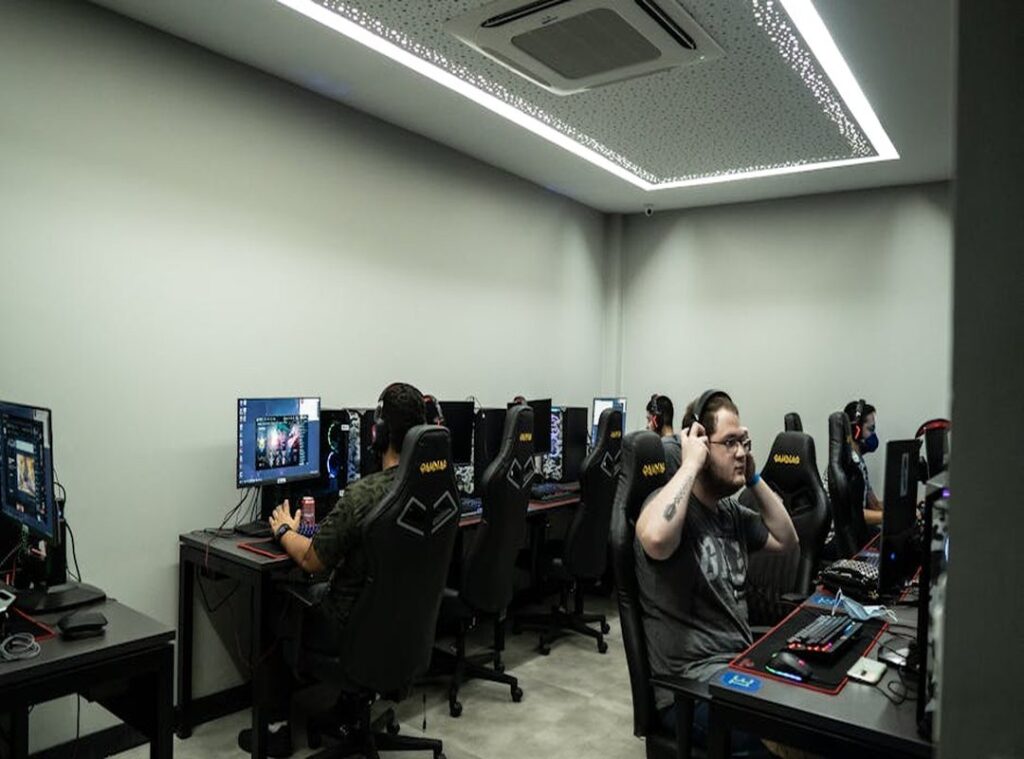
You remember that kid in the basement playing video games while everyone else was outside.
Yeah. That’s not what esports is anymore.
I’ve watched this grow from LAN parties in garages to arenas packed with screaming fans and prize pools bigger than some pro sports contracts.
And yet. Most people still think it’s just kids clicking buttons.
They don’t see the training regimens. The sponsor deals. The full-time coaches.
The college scholarships.
That’s why I dug deep into the data, talked to players, analysts, and team owners. And built this around Why Esports Are Important Hcdesports.
This isn’t a surface-level stats dump.
It’s the real reason esports matters now (not) as a trend, but as culture.
You’ll walk away understanding how it reshapes careers, media, and even education.
No fluff. No hype. Just what’s actually happening.
From Niche Hobby to Global Spectacle: Esports Are Real
I watched the 2023 League of Legends World Championship finals in person. The crowd roared like it was Game 7 of the NBA Finals. Because for them, it was.
The International 2023 for Dota 2 hit 1.2 million concurrent viewers on Twitch alone. That’s more than the 2023 MLB All-Star Game (850K) and nearly double the average viewership of the 2023 NBA Finals Game 4.
Does that surprise you? It shouldn’t.
The Super Bowl LVII pulled 113 million total viewers. Huge, yes. But esports events now draw global, simultaneous, digital-first audiences.
No stadium cap. No time zone limits.
Hcdesports is where I go to track how fast this is moving. They break down what’s actually growing (not) just hype.
Esports arenas aren’t glorified basements anymore. Seoul’s Jamsil Indoor Stadium hosted 40,000 fans for LoL Worlds. Berlin’s Mercedes-Benz Arena ran a full broadcast with LED walls, drone cams, and audio mixing rivaling ESPN.
Commentators (we) call them casters (prep) like sportscasters. Some have Ph.D.s in game theory. Others spent 10,000 hours in one title.
They’re not “just talking over gameplay.”
Top players sign $2M+ contracts. Faker earned $2.5M in prize money alone by 2023 (Esports Earnings database). Streamers like xQc pull 200K+ live viewers daily.
That’s bigger than most regional sports networks.
This isn’t “gaming.” It’s infrastructure. It’s labor. It’s culture.
You don’t need to love League or Dota to see the shift. You just need to notice the stadiums filling up. The sponsors showing up.
Why Esports Are Important Hcdesports isn’t about convincing skeptics. It’s about recognizing what’s already built.
The kids choosing pro gaming over JV basketball.
Esports Isn’t Just Games. It’s Payroll, Profit, and Power
I watched a $2.3 million Fortnite tournament last year. The prize pool got headlines. But the real money?
It flowed around the players.
Sponsorships from Mercedes-Benz, Louis Vuitton, and Goldman Sachs aren’t vanity moves. They’re cold, hard bets on audience size and engagement. Louis Vuitton didn’t design a League of Legends skin for fun (they) paid $10 million for that partnership in 2022 (Bloomberg).
That’s not niche. That’s mainstream legitimacy.
You think esports only employs gamers? Wrong. I’ve met data analysts who track microsecond player reaction times.
Broadcast techs who build low-latency streams for 5 million concurrent viewers. Event coordinators who manage arenas full of 12,000 fans. With security, merch, food, and Wi-Fi that doesn’t die.
That’s over 82,000 full-time jobs in the U.S. alone (Newzoo, 2023). Not contractors. Not side gigs.
Full-time roles (with) health insurance and 401(k)s.
Hardware companies ride this wave too. NVIDIA’s RTX line? Pushed by streamers demanding better encoding.
AMD’s Ryzen chips? Benchmarked relentlessly on Valorant and CS2. Twitch and YouTube Gaming didn’t just appear.
They scaled because esports demanded real-time, high-fidelity delivery.
And yes (it’s) all connected. Better hardware enables better streams. Better streams attract bigger sponsors.
Bigger sponsors fund it teams. Better teams draw more fans. More fans mean more jobs.
Why Esports Are Important Hcdesports isn’t about hype. It’s about economics you can measure.
You still think it’s “just kids playing games”? Look at the payroll. Look at the balance sheets.
Look at the server racks humming in data centers right now. Running esports broadcasts while your laptop struggles to load email.
Pro tip: Follow the ad spend. Not the highlight reels. That’s where the truth lives.
Digital Nations Are Real. And They’re Loud

I used to think esports fans were just people watching other people play games.
Then I spent a week inside a League of Legends team house in Seoul.
That changed everything.
These aren’t isolated gamers. They’re teammates who eat, train, and sleep together for 14 hours a day. They review footage like NFL coaches.
They see sports psychologists. One player told me he tracks his caffeine intake more than his protein.
I covered this topic over in Online Gaming Guide Hcdesports.
That’s not hobbyist energy. That’s athlete energy.
You don’t build a global fandom by accident. Fans wear jerseys. They learn team chants in Korean, Spanish, or Arabic.
Even if they don’t speak the language. They organize charity streams that raise six figures. They map rivalries like medieval dynasties.
This isn’t “just gaming.” It’s identity. Belonging. Shared stakes.
Does it feel weird to call a 20-year-old Dota 2 player an athlete? Yeah. It did to me too.
Until I watched one do breathing drills before a match while his coach timed him with a stopwatch.
The training is real. The pressure is real. The injuries are real (carpal tunnel, vision strain, burnout).
If you still think esports lacks structure, check the Online Gaming Guide Hcdesports. It breaks down how pro teams operate. No hype, just logistics.
Why Esports Are Important Hcdesports isn’t about convincing skeptics.
It’s about naming what’s already happening.
People are building nations online. No passports required. Just loyalty, skill, and a damn good headset.
I’ve seen fans cry after a finals loss.
Same look I saw at the 2016 Rio Olympics.
Same intensity. Same meaning.
Call it what you want.
I call it real.
Esports Isn’t Niche Anymore. It’s the Main Event
Netflix dropped Arcane. Not a game trailer. A full-blown TV series.
People who’ve never touched a controller binged it in one weekend.
K/DA isn’t a real band. But their music charted. Their virtual concert at Worlds drew more viewers than some NBA playoff games.
Michael Jordan owns part of Team Liquid. Drake backed TSM. Post Malone performed live at an LCS final.
And didn’t just show up. He stayed for three matches.
This isn’t crossover. It’s absorption.
Esports built its own culture. Then mainstream entertainment started borrowing from it, not the other way around.
Why Esports Are Important Hcdesports? Because influence doesn’t ask for permission.
You want proof? Check the Hcdesports gaming guide by harmonicode (it) maps how fast this shift happened.
I read it twice. First time for facts. Second time to confirm I wasn’t hallucinating.
You’re Already in the Game
Esports isn’t a side hobby. It’s not “just kids playing games.”
That idea is outdated. And it’s costing people real understanding.
I’ve seen how fast this shifts. How fast stadiums fill. How fast brands pivot.
How fast careers launch.
Why Esports Are Important Hcdesports (because) culture doesn’t wait for permission.
You felt that disconnect, didn’t you? That gap between what you see on Twitch and what your boss still calls “a pastime.”
It’s not about liking video games.
It’s about recognizing where attention, money, and identity are moving right now.
So pick one thing. Watch the next major tournament. No commentary, just watch the crowd roar.
Follow a team on Twitter. See how they talk to fans like peers. Then tell someone what you noticed.
Your turn. Go watch. Go follow.
Go talk. Do it before the next headline drops.