
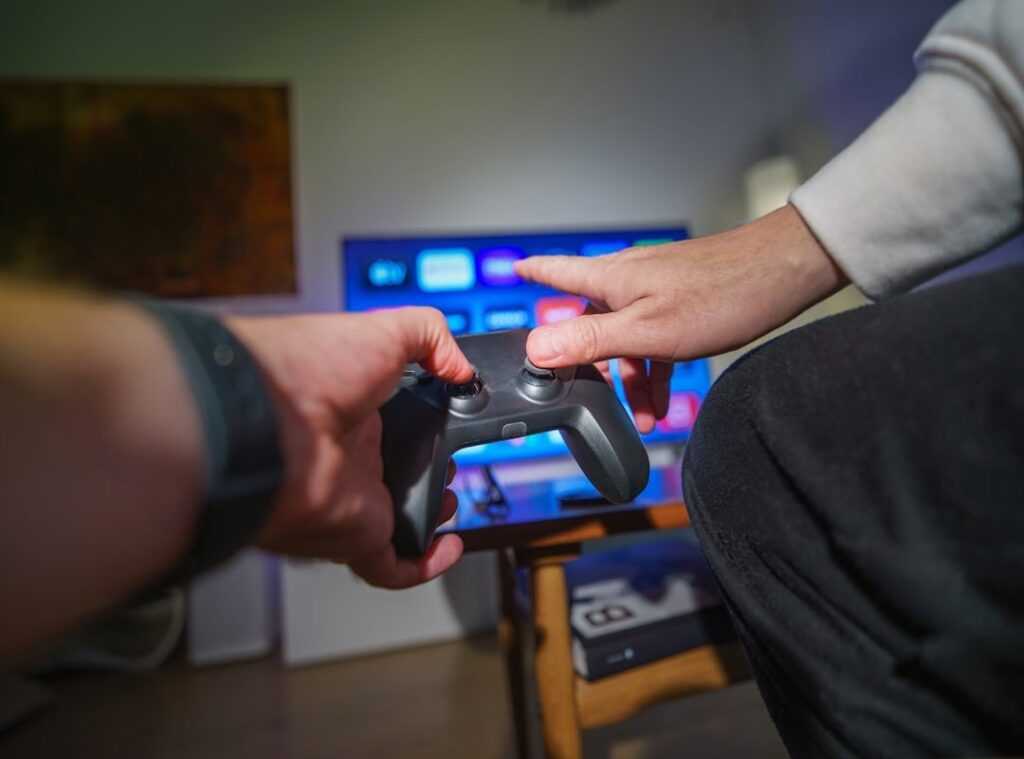
Ever feel like your controller is the real reason you’re stuck in a gaming rut? I know how it feels to blame hardware for that skill plateau. But what if I told you it’s not just about playing more?
This article cuts through the noise with concrete controller responsiveness hacks. I’ve spent years dissecting game mechanics and learning from esports pros. We’re diving deep into improving accuracy, speeding up reaction times, and achieving consistent gameplay.
No matter if you’re into FPS, battle royales, or action games, these tips are for you.
Trust me, mastering your controller and in-game settings will change everything. Ready to leave “average” behind and reach the apex? Let’s get into it and make your gameplay what it should be: unbeatable.
Get a Grip: The Key to Gaming Comfort
Gaming starts with the basics: the hardware you hold. A comfortable controller is your best friend during those long sessions. Ever felt your hand cramping up after a few hours?
Yeah, me too. That’s why understanding grip styles is key. There’s the standard grip, which is what most people use.
Then there’s the claw grip, popular with FPS players (think fast reflexes and rapid button presses). And let’s not forget the hybrid, a mix of both. Each grip has its pros and cons depending on the game.
Claw grip, for instance, is a lifesaver in FPS games. It lets you hit buttons without moving your thumbs off the sticks. But it can be uncomfortable if you’re not used to it.
So, what’s the solution? Hardware mods. Thumbstick extenders like KontrolFreeks give a wider range of motion.
Performance grips provide better hold and comfort. And pro controllers with back paddles? They let you remap face buttons, which is a game-changer (literally).
Here’s a quick guide for you. Start by assessing your grip. Are you feeling any pain or fatigue?
That could be a sign of ergonomic issues. Experiment with different grips and find what feels best. You might be surprised at how much it affects your play.
And for those looking for a deep dive into optimizing your setup, check out this top controller settings precision guide. It’s packed with controller responsiveness hacks.
Remember, it’s not just about playing longer. It’s about playing better. And it all begins with the right foundation.
Dialing It In: Master Controller Settings
Alright, let’s get straight to it. If you’re like me, you’ve probably spent way too many hours tweaking your controller settings. Why?
Because finding that sweet spot is the holy grail of gaming. First up, Look Sensitivity. This one dictates how fast or slow your view moves.
If it’s too high, you’re spinning like a top. Too low, and you can’t keep up with your target. It’s all about balance.
Then there’s ADS (Aim Down Sights) Sensitivity. When you’re aiming down sights, you need precision. A lower setting here can help, but too low might slow you down in fast-paced scenarios.
And don’t get me started on Scope Multipliers. They adjust sensitivity while scoped in. Tweak these to match your gameplay style.
If you’re sniping, you want more precision. If you’re close-range, maybe less so.
Now, the ‘deadzone’ settings. Ever heard of stick drift? That’s what happens when your thumbstick gets too sensitive.
Trust me, it’s annoying.
Lower deadzone settings increase responsiveness, but they can also introduce drift. Finding the lowest stable setting is key. You don’t want your character moving on its own.
Response Curves. Linear, Changing, Standard. Are another beast.
Linear gives you raw input. Changing offers a mix of fast turns and fine adjustments. Standard?
A bit of both. Depending on your aiming style, one might fit better. For precise aiming, Linear’s your friend.
For versatility, maybe Changing.
Want to dive deeper? Check out this detailed guide for more.
Here’s a pro tip: Use a game’s training mode for a sensitivity calibration exercise. Start with a default setting. Adjust one setting at a time.
Play around until it feels right. Does it take time? Sure.
But once you’ve dialed it in, you’ll notice the difference.
In the end, these controller responsiveness hacks aren’t just about settings. They’re about your personal play style. Each game might require a slight tweak.
So, keep adjusting and experimenting. It’s worth it.
Advanced Aiming: Master Your Moves
to the nitty-gritty of high-level play. You can’t just tweak settings and call it a day. You need to execute with precision.
Starting with centering. Keeping your crosshair at head level where you expect enemies to pop up is a must. It’s not just a habit.
It’s the foundation of pro gameplay. You want to be ready the moment an enemy appears.
Next up, strafe aiming. Ever notice how some players are just impossible to hit? They use left-stick movement for those micro-adjustments while aiming.
This reduces reliance on the right stick. It’s a game changer for controller responsiveness hacks. It makes your movement less predictable.
This technique keeps you alive longer. Don’t just fight recoil. Learn its pattern.
With practice, you can counter-move with the right stick. It’s all about consistency. This isn’t something you’ll master overnight.
But once you do, your shots will land more often.
Now, let’s talk about flick shots versus tracking. Flick shots are great for sudden, fast targets. But tracking is ideal for moving enemies.
Which is better? Depends on the scenario. Practice both.
Drills matter. Set up scenarios to hone each style. You’ll need both in your toolkit.
Wondering about gear? Check out the best controller accessories gamers. They can give you that extra edge.
Pro tip: Focus on one technique at a time. Master it. Then move to the next.
Mixing them up too early can muddle your muscle memory. In the end, it’s all about practice and adaptation. You’ve got this.
Ready to raise your game? Start applying these techniques today.
The Mental Game: Mastering Consistency and Flow
Want to step up your game? Shift your focus from pure technical skills to that hard to find mental aspect. It’s a game-changer.
Structured practice beats mindless play every day. How? With aim trainers and in-game drills.
Let’s keep it simple and effective. Try a ‘target switching’ drill in training mode. It sharpens your reflexes, trust me.
Then there’s the ‘recoil control’ drill. Stand against a wall, control that spray. Feels basic, but it works.
Ever heard of a ‘flow state’? It’s when everything feels just right. Consistent settings are key.
Don’t keep tweaking. Find what works and stick. It helps build muscle memory.
Mess with your setup too much, and you’ll just derail progress. Frustration and tilt? Manage them.
Stay calm, and your decision-making skyrockets. You know the feeling when your controller suddenly feels off? Maybe it’s not you, but some sneaky controller responsiveness hacks could help.
Pro tip: Keep your practice sessions short but focused. Don’t just grind for hours. Quality over quantity, always.
Level Up Your Game (Break) the Ceiling Now
Feeling stuck in your gaming performance? You’re not alone. I’ve felt that same wall.
Mastering your controller isn’t just about playing more; it’s about smart tweaks and practice. You’ve got the tools now. With controller responsiveness hacks, you can finally break through.
But remember, this isn’t magic. It’s a process. Consistency beats quick fixes.
So, what are you waiting for? Pick a tip from this guide, dive into your favorite game’s training mode, and start building those habits today. Trust me, you’ll notice the difference.
Ready to dominate the lobby? Let’s go!
 There is a specific skill involved in explaining something clearly — one that is completely separate from actually knowing the subject. Ardath Biblecons has both. They has spent years working with civiliden multiplayer engine analysis in a hands-on capacity, and an equal amount of time figuring out how to translate that experience into writing that people with different backgrounds can actually absorb and use.
Ardath tends to approach complex subjects — Civiliden Multiplayer Engine Analysis, Controller Setup Hacks, Core Gaming Mechanics and Tips being good examples — by starting with what the reader already knows, then building outward from there rather than dropping them in the deep end. It sounds like a small thing. In practice it makes a significant difference in whether someone finishes the article or abandons it halfway through. They is also good at knowing when to stop — a surprisingly underrated skill. Some writers bury useful information under so many caveats and qualifications that the point disappears. Ardath knows where the point is and gets there without too many detours.
The practical effect of all this is that people who read Ardath's work tend to come away actually capable of doing something with it. Not just vaguely informed — actually capable. For a writer working in civiliden multiplayer engine analysis, that is probably the best possible outcome, and it's the standard Ardath holds they's own work to.
There is a specific skill involved in explaining something clearly — one that is completely separate from actually knowing the subject. Ardath Biblecons has both. They has spent years working with civiliden multiplayer engine analysis in a hands-on capacity, and an equal amount of time figuring out how to translate that experience into writing that people with different backgrounds can actually absorb and use.
Ardath tends to approach complex subjects — Civiliden Multiplayer Engine Analysis, Controller Setup Hacks, Core Gaming Mechanics and Tips being good examples — by starting with what the reader already knows, then building outward from there rather than dropping them in the deep end. It sounds like a small thing. In practice it makes a significant difference in whether someone finishes the article or abandons it halfway through. They is also good at knowing when to stop — a surprisingly underrated skill. Some writers bury useful information under so many caveats and qualifications that the point disappears. Ardath knows where the point is and gets there without too many detours.
The practical effect of all this is that people who read Ardath's work tend to come away actually capable of doing something with it. Not just vaguely informed — actually capable. For a writer working in civiliden multiplayer engine analysis, that is probably the best possible outcome, and it's the standard Ardath holds they's own work to.