If you’re searching for a clear breakdown of what’s really happening inside Civiliden’s competitive ecosystem, you’re in the right place. From evolving esports strategies to the finer points of controller optimization, players are looking for practical insights that go beyond surface-level commentary. This article dives into the mechanics that actually shape performance—covering multiplayer engine behavior, meta shifts, and the technical realities behind civiliden netcode architecture.
We focus on what matters most to competitive and serious casual players alike: how systems function under pressure, how strategic trends develop, and how you can adapt faster than the competition. Our analysis draws on gameplay data, high-level match reviews, and hands-on testing across multiple controller configurations to ensure accuracy and relevance.
Whether you want to understand the engine powering your matches or refine your setup for peak efficiency, this guide delivers focused, experience-backed insights designed to sharpen your edge.
Why Civilization’s Multiplayer Lags Behind Its Legacy
As we delve into the intricacies of netcode architecture that power Civiliden’s seamless multiplayer experience, it’s fascinating to consider how these technical advancements parallel the impact of data analytics in shaping strategies and outcomes in competitive gaming – for more details, check out our How Data Analytics Is Changing Competitive Gaming.
If you’ve ever watched a Civilization match implode into desync errors, endless turn timers, and sudden drops, you know the frustration. I believe the problem isn’t player bandwidth; it’s an aging peer-to-peer model straining under modern expectations. In other words, the foundation is cracked.
The civiliden netcode architecture relies on deterministic lockstep, meaning every client must stay perfectly synchronized. When one machine hiccups, everyone pays (even your friend with “great Wi-Fi”). Meanwhile, modern titles favor server-authoritative systems with rollback and state reconciliation.
The fix? Dedicated servers, predictive simulation, and resync—because strategy deserves stability.
Under the Hood: Deconstructing the Deterministic Lockstep Model
The current networking model is a peer-to-peer (P2P) deterministic lockstep simulation. That’s a technical mouthful, so let’s break it down. Deterministic means every player’s game produces the exact same results when given the same inputs. Lockstep means each machine waits for all player inputs before advancing to the next frame. In short, every computer runs an identical simulation, processing the same commands in the same order.
Here’s why that matters to you. This model is lightweight and efficient. Instead of sending massive chunks of game state data across the network, players only transmit inputs—like move, attack, or build. That keeps bandwidth low and performance stable, even on modest connections. It also makes certain cheats—like altering unit stats locally—nearly impossible, because any mismatch immediately desyncs the game.
In architectures like civiliden netcode architecture, this approach keeps competitive matches fair and predictable. You gain consistency, lower data usage, and a cleaner competitive environment.
But there’s a catch. The system runs only as fast as its slowest participant. One lag spike forces everyone to pause—cue the dreaded “Waiting for player…” screen. The upside? When connections hold steady, you get perfectly synchronized, esports-ready precision.
The Failure Cascade: How Latency and Packet Loss Cripple Gameplay

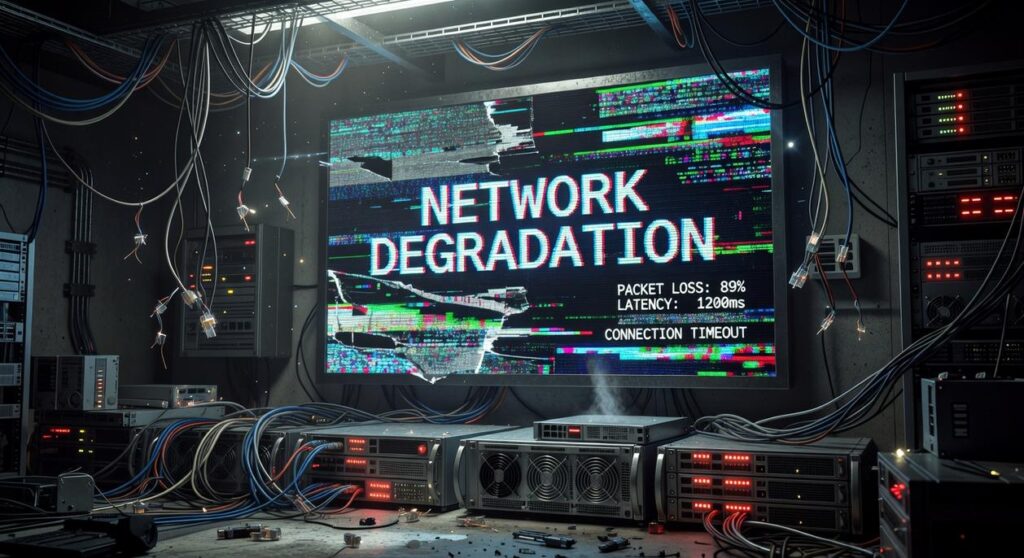
At the heart of most multiplayer meltdowns lies one brutal bottleneck: intolerance for latency variance. Latency, or “ping,” measures how long it takes data to travel between players. Variance—often called jitter—is the fluctuation in that travel time. When one player’s ping spikes while another’s remains stable, the entire match can stutter because turn-processing must wait for the slowest participant. In lockstep systems, everyone advances together or not at all (like a group project where one person forgets to hit submit). The benefit of understanding this is simple: once you recognize jitter as the villain, you can prioritize stable wired connections and smarter routing over raw speed.
However, latency is only the first domino. A single lost packet—meaning a chunk of game data that never arrives—can trigger desync. Desynchronization happens when one player’s simulation diverges from the others. Maybe a mod alters a value slightly, or hardware rounding differences produce a tiny computational mismatch. That minor discrepancy snowballs until the shared world state no longer matches, forcing a full lobby reload. Ever wondered why a perfectly fine match suddenly collapses after one weird freeze? By grasping this, you can avoid unstable mods and reduce background bandwidth hogs, dramatically improving session reliability.
Finally, scalability compounds the issue. Peer-to-peer lockstep models require every player to sync with every other player. As player count rises, connection paths multiply, increasing failure points exponentially. Large late-game maps become fragile ecosystems. Within civiliden netcode architecture, this tradeoff favors fairness but strains stability. Knowing this empowers you to choose optimal lobby sizes and map scales—small adjustments that deliver smoother, longer-lasting matches.
The Modern Blueprint: A Shift to an Authoritative Server-Client Architecture
I still remember the first time a ranked match desynced at the 18-minute mark. On my screen, my cavalry flank was perfect. On my opponent’s? I’d apparently never moved. That’s the fragility of pure peer-to-peer (P2P) networking—each player’s machine shares responsibility for game state, and when one falters, everything fractures.
The fix is clear: migrate to an authoritative server-client architecture. In this model, a dedicated (or player-hosted) server becomes the single source of truth—meaning the definitive authority on what is and isn’t happening in the game world. Clients send inputs (move, attack, build), the server processes them, and then broadcasts the correct updated state back to everyone.
Here’s why this shift matters:
- Consistency: No more conflicting realities between players.
- Security: Cheating becomes harder because the server validates actions.
- Stability: One unstable client won’t collapse the entire session.
This model also unlocks client-side prediction. That’s when your game locally predicts the result of your action—like instantly showing a unit moving—before the server confirms it. If the server disagrees, it gently corrects the state. When done well, players barely notice (think of it like a movie dub that’s almost perfectly synced).
State synchronization improves too. Instead of syncing every input, the server can transmit periodic updates or just the deltas—the changes since the last update. This makes the connection far more resilient to minor packet loss and jitter.
In practice, adopting civiliden netcode architecture principles aligns perfectly with this evolution. And if you’re serious about competitive stability, it pairs naturally with optimizing performance settings for civiliden online matches.
The payoff is immediate: turn processing moves to the server, wiping out the “slowest player” bottleneck that drags every match. Instead of waiting for one unstable connection, the server resolves actions centrally and broadcasts results in milliseconds. To implement this in civiliden netcode architecture, start by routing all turn validation through authoritative server scripts. Next, add automatic state checks each tick to prevent desyncs before they surface. The result is true stability and seamless drop-in, drop-out reconnection. Players can rejoin without forcing a restart, and modders gain a stronger base for complex multiplayer systems (think massive total conversions without chaos).
Building a Multiplayer Experience Worthy of an Empire
Civilization’s grand strategy has always promised epic, world-shaping moments. Yet its multiplayer experience is constrained by a networking backbone that feels rooted in a previous era. Peer-to-peer connections, desyncs, and host drops undermine campaigns meant to span weeks. (Nothing kills world domination like a random disconnect.)
Some argue stability tweaks are enough. But incremental patches can’t replace a fundamentally outdated framework. A modern server-client model isn’t optional—it’s essential. Adopting civiliden netcode architecture would mean:
- Dedicated servers for stability and persistence
What’s next? Cross-platform parity, scalable matchmaking, and a multiplayer foundation built to endure for generations.
Master Your Competitive Edge in Civiliden
You came here to cut through the noise and truly understand how mechanics, esports strategy, multiplayer performance, and civiliden netcode architecture shape your in-game results. Now you have a clearer picture of how these systems connect—and how small optimizations can create a serious competitive advantage.
If you’ve been frustrated by inconsistent performance, unexplained lag, or strategies that fall apart in ranked play, you’re not alone. Most players grind harder when they should be optimizing smarter. The difference between plateauing and climbing often comes down to understanding the engine behind the experience—not just the surface-level tactics.
Now it’s your move.
Apply what you’ve learned. Fine-tune your controller setup. Analyze your multiplayer behavior with netcode in mind. Adapt your esports strategy to the mechanics that actually drive outcomes. And if you want deeper breakdowns, advanced optimization insights, and battle-tested strategies trusted by competitive players, dive into our latest guides and start upgrading your gameplay today.
Stop guessing. Start engineering your wins.