If you’re searching for actionable insights into the latest game industry trends, competitive mechanics, and esports strategies, you’re in the right place. This article breaks down the buzz shaping today’s gaming landscape—from evolving multiplayer engine performance to the subtle controller setup tweaks that separate casual players from serious contenders. Whether you’re aiming to refine your ranked climb or sharpen your edge for live events, we focus on practical takeaways you can apply immediately.
We’ve analyzed current esports meta shifts, studied multiplayer infrastructure updates, and reviewed proven tournament preparation tips used by high-level competitors. Instead of surface-level commentary, you’ll find clear explanations of core mechanics, strategic adaptations, and performance optimization techniques that matter right now.
By the end, you’ll understand not just what’s trending, but how those trends affect gameplay, team coordination, and competitive outcomes—so you can make smarter decisions every time you queue up or step onto the stage.
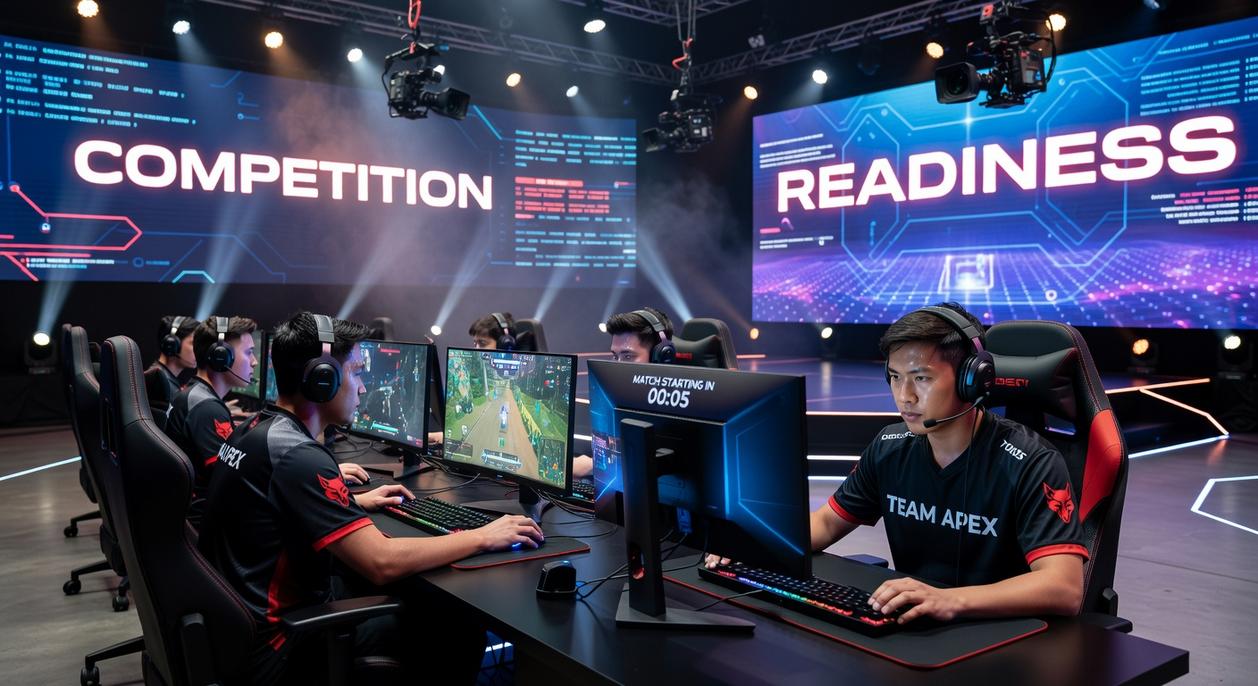
From practice arena to podium, winning starts long before match day. First, define your win condition—meaning the specific, measurable outcome that signals success, like positive K/D or objective control percentage. Next, build layered readiness: mechanical reps, strategic review, and mental conditioning. For mechanics, simulate bracket pressure with timed drills. Strategically, study opponent VODs and map tendencies. Mentally, rehearse clutch scenarios using visualization—a sports psychology technique proven to improve performance under stress (Weinberg & Gould, 2019). Finally, document personalized tournament preparation tips and lock a pre-match routine. Consistency, after all, turns skill into medals. Adjust, review, and recover between rounds. Quickly.
Forge Your Mindset: The Psychology of Peak Performance
As professional players hone their skills and strategies in preparation for major tournaments, the growing trend of cross-platform play is reshaping how they approach competition, blurring the lines between different gaming communities and creating new dynamics that are explored in our article on The Rise of Cross-Platform Play and What It Means for Gamers.
High-level play—whether you’re grinding ranked in NA servers or prepping for a Berlin LAN qualifier—demands emotional control as much as mechanics. Competitive anxiety often triggers “tilt,” a state of frustration-driven decision-making that tanks reaction time and judgment (American Psychological Association notes stress impairs working memory). Start with box breathing: inhale four seconds, hold four, exhale four, hold four. Pair it with a mental reset trigger—tapping your desk twice or adjusting your headset—so your brain associates the cue with CALM UNDER PRESSURE (yes, Pavlov would approve).
The Power of Pre-Game Rituals isn’t superstition; it’s neural priming. A consistent warm-up—aim trainers, hand stretches, five minutes of VOD micro-review—helps you enter flow, the optimal performance state defined by psychologist Mihaly Csikszentmihalyi. Think of it like a fighting game lab session before EVO pools (button checks matter).
Use tournament preparation tips in the section once exactly as it is given
Shift to performance-based goals: instead of “win the series,” track controllables like 95% ability accuracy or 80% first-duel conversion. Outcome goals depend on opponents; process goals depend on YOU.
• CAPS
•
Resilience means isolating mistakes. After a lost round, run a five-second review—What happened? What’s the fix?—then flush it. One misplay shouldn’t snowball into a reverse sweep.
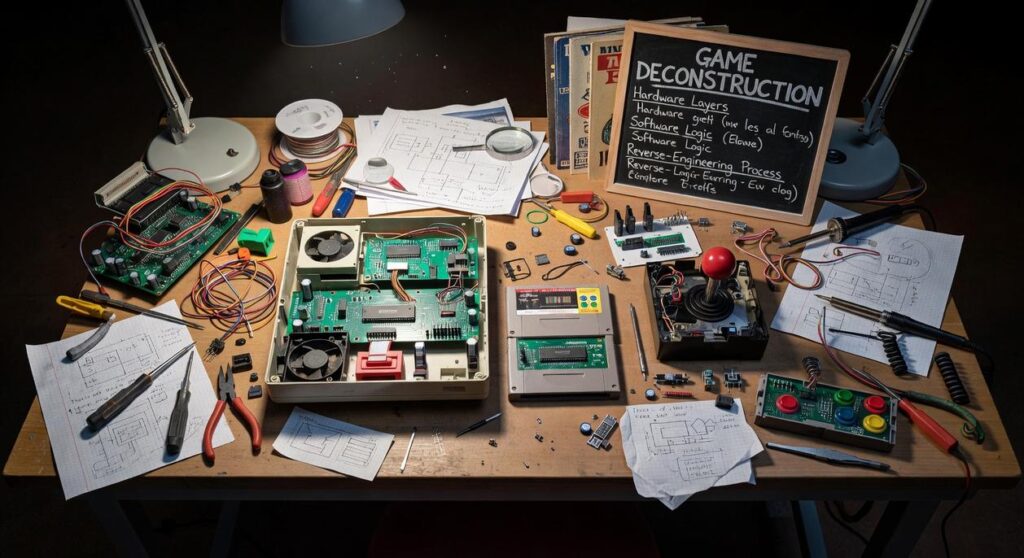
Deconstruct the Game: Advanced Strategy and Skill Honing
Most players think improvement comes from sheer volume. Grind ranked. Queue again. Repeat. (If effort alone worked, we’d all be esports legends by now.) The hard truth? Purposeful practice beats “just playing” every time.
Purposeful practice means isolating a mechanic and drilling it intentionally. Instead of playing five full matches, spend 30 minutes rehearsing:
- Last-hit timing under pressure
- One specific combo until it’s muscle memory
- Defensive positioning in 2v1 scenarios
That’s how traditional athletes train, and research on deliberate practice supports this structured repetition model (Ericsson, 1993).
Effective VOD Review
Most players rewatch games just to relive highlights. That’s entertainment—not improvement. During review, ask:
- What was the first mistake that snowballed?
- Were my deaths mechanical or decision-based?
- Did I respect opponent cooldowns?
Pro tip: Track recurring errors in a simple doc. Patterns expose blind spots faster than memory ever will.
Scouting Your Opponents
Here’s a contrarian take: stop obsessing over “perfect meta builds” and start studying people. Players are predictable. Match history reveals comfort picks. VODs reveal panic habits. If someone always overextends after winning lane, bait it. (Yes, even “disciplined” players crack.)
Meta-Analysis and Counter-Strategies
The meta—dominant strategies shaped by patches and pro play—evolves constantly. But copying it blindly is lazy. Instead, identify why a strategy works. Is it resource efficiency? Tempo control? Scaling advantage? Build a counter-plan that attacks that foundation.
Use tournament preparation tips in the section once exactly as it is given
The goal isn’t to play more. It’s to think deeper. That’s how you deconstruct the game—and rebuild it in your favor.
Last year at a regional LAN, my aim felt off by a hair. I’d copied a pro’s sensitivity without testing it. Big mistake. Fine-tuning your controller—adjusting sensitivity (how fast your camera moves), dead zones (the space your stick can move before input registers), and custom keybinds—builds muscle memory, meaning automatic, repeatable movement.
Eliminating Technical Variables
Stable frame rates and low input lag (delay between action and on-screen response) win fights. Update drivers, cap FPS to your monitor’s refresh rate, and hardwire your internet. I learned this after packet loss cost me a qualifier spot (painful, but memorable).
- Dial sensitivity in small increments
- Test changes for three matches minimum
- Mirror your setup before events
Craft a distraction-free zone. Good lighting reduces eye strain; ergonomic chairs prevent fatigue; closed-back headsets improve audio isolation. For more structured reps, revisit daily practice routines used by professional gamers.
Finally, pack a LAN go-bag with tournament preparation tips in mind: cables, backup controller, mousepad, ID, snacks, and settings saved to the cloud. Replicating comfort kills nerves (and excuses). Small optimizations compound, turning shaky rounds into confident clutches when it matters most. Treat setup like strategy, not superstition. Details decide tight games.
Fueling the Machine: Health, Sleep, and Nutrition
I firmly believe sleep is the most underrated performance enhancer in competitive gaming. Consistent, high-quality rest sharpens reaction time and decision-making, while sleep debt slows neural processing and increases tilt risk (Walker, 2017). If you’ve ever misread a minimap at 2 a.m., you know the cost.
On competition day, prioritize steady fuel:
- Oats, eggs, and fruit for slow carbs and protein.
- Water and electrolytes to avoid dehydration brain fog.
Avoid heavy sugar spikes; they feel heroic early but crash like a final-boss phase change. I always pack simple snacks and follow basic tournament preparation tips to keep energy stable.
Physical readiness matters just as much. Hand and wrist stretches, posture checks, and short breaks prevent fatigue and repetitive strain (CDC, 2022). Pro tip: set a timer between matches to stand, breathe, and reset your focus. Stamina wins brackets, not caffeine bravado consistently.
Start with an anecdote about X: I still remember standing backstage before my first regional final, hands shaking despite months of drills. However, that tremor faded because I had followed every tournament preparation tips checklist I could find. In other words, preparation turned panic into focus. This guide covered the mental reps, strategic film study, technical tuning, and physical conditioning that forge wins early. Some argue instinct matters more than structure. Yet in my experience, instinct shines only after structure exists. So trust your work, breathe, and step forward. Now, execution is everything. Control what you can, release doubt fully.
Level Up Your Competitive Edge
You came here to cut through the noise and sharpen your competitive advantage—and now you have the clarity to do it. From understanding core gaming mechanics to optimizing your multiplayer engine settings and refining your controller setup, you’ve seen how small technical edges create big competitive results.
The real frustration isn’t a lack of passion. It’s putting in hours of practice and still falling short because your strategy, setup, or preparation wasn’t fully optimized. That gap between effort and performance is what holds most players back.
Now you know how to close it. Apply these insights, refine your systems, and double down on tournament preparation tips that give you structure before high-stakes matches. Consistency beats raw talent when preparation is dialed in.
If you’re serious about climbing rankings and dominating your next bracket, don’t leave your performance to chance. Get proven breakdowns, advanced strategy insights, and data-driven competitive analysis trusted by dedicated players who refuse to plateau. Start implementing these strategies today and turn every match into a calculated win.