
If you’re trying to decide between plugging in or going cordless, you’re likely searching for clear, no-nonsense answers about wired vs wireless controller performance—especially in competitive play. Input lag, stability, battery life, signal interference, and real-world esports viability all factor into the decision, but most comparisons barely scratch the surface.
This article breaks down the measurable differences in latency, response consistency, and reliability across modern platforms. We’ll also examine how multiplayer engine design, tournament standards, and controller optimization settings influence performance in ways most players overlook.
To ensure accuracy, we analyzed manufacturer specs, reviewed independent latency testing data, and cross-referenced findings with competitive gaming benchmarks and esports best practices. The result is a focused, evidence-based guide that helps you determine which setup actually fits your playstyle—whether you’re grinding ranked matches or competing at a high level.
The Milliseconds That Matter: Choosing Your Next Controller
When matches are decided in a single frame, small delays feel huge (just ask any fighting game veteran). So let’s break down wired vs wireless controller performance in practical terms.
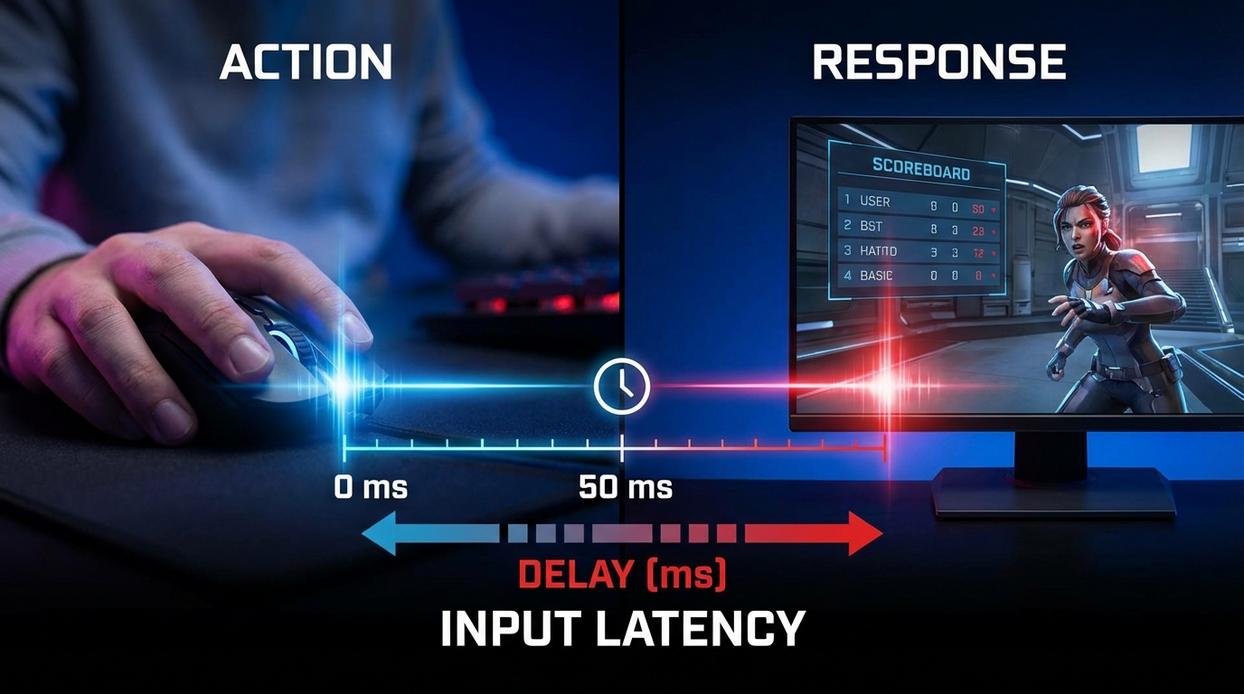
First, define input latency: the time between pressing a button and seeing the action on screen. Lower latency means faster response.
Here’s a simple decision framework:
- Competitive esports? Go wired for minimal interference and consistent latency.
- Couch or casual play? Wireless offers freedom with nearly imperceptible delay.
- Crowded Wi‑Fi space? Expect possible signal interference.
Ultimately, test your setup—your room matters as much as your reflexes.
Input Lag Deep Dive: The Unseen Enemy
Input latency is the delay between a button press and the corresponding action appearing on screen. It’s measured in milliseconds (ms) because even tiny slices of time shape competitive outcomes. In a 60 frames per second game, one frame lasts about 16.67ms (NVIDIA, 2023). So yes, a few milliseconds matter.
First, consider wired controllers. Through a direct USB connection, they typically achieve 1–4ms of latency. That’s largely due to higher polling rates, often 1000Hz, meaning the device reports input one thousand times per second. Pro tip: enable the highest polling rate your system supports.
Meanwhile, wireless controllers are closing the gap. High-end 2.4GHz dongles now average 4–8ms, while standard Bluetooth ranges from 10–20ms or more (RTINGS, 2024). This makes wired vs wireless controller performance less dramatic than it once was. Still, stability matters as much as raw speed.
Next, game engines process these signals differently:
- Unreal Engine often queues input alongside frame rendering, which can introduce variability if frames drop.
- Proprietary engines like Frostbite integrate tighter input prediction systems for multiplayer consistency.
As a result, consistent low latency is critical for competitive play.
Looking ahead, here’s speculation: we’ll likely see sub-2ms wireless standards and engine-level AI prediction smoothing out spikes. However, physics and network constraints mean zero latency will remain fantasy (sorry, no Matrix reflex upgrades yet).
Ultimately, the unseen enemy isn’t just delay; it’s inconsistency. And in esports, inconsistency is defeat waiting to happen. Milliseconds decide matches every day worldwide.
Signal Integrity: Interference and Reliability
The Wired Advantage
A wired controller sends inputs through a physical cable, which means the signal travels as electrical data directly to your console or PC. Because it isn’t transmitted over radio frequency (RF), it’s immune to environmental interference. In practical terms, that equals near 100% signal reliability—no packet loss, no signal drops, no surprise disconnects mid-clutch. For competitive players, this stability translates into consistent frame-to-input response (the time between pressing a button and seeing the action on-screen). In debates around wired vs wireless controller performance, this hardline stability is the wired camp’s biggest advantage.
The Wireless Challenge
However, wireless controllers typically operate on 2.4GHz or Bluetooth frequencies—the same spectrum used by Wi-Fi routers, cordless phones, and even microwaves. When multiple devices crowd that band, signal congestion can occur. The result? Stuttering movement, missed inputs, or momentary disconnects (usually at the worst possible time). USB 3.0 ports can also emit electromagnetic interference that disrupts nearby 2.4GHz dongles.
Controller Setup Hacks
Fortunately, you can reduce interference. First, use a USB extender to position your wireless dongle in clear line-of-sight. Next, switch your router to a less crowded Wi-Fi channel. Finally, avoid plugging wireless receivers directly beside USB 3.0 devices. And if you’re optimizing triggers too, review trigger stops and hair triggers do they improve accuracy for deeper mechanical gains.
Freedom vs. Function: Ergonomics and Practicality
When choosing a controller, it often comes down to freedom vs. function—movement versus reliability.
The Freedom of Wireless
Wireless controllers shine in comfort and flexibility. No cable drag. No awkward rerouting across your coffee table. Just you, the screen, and full range of motion (yes, even those dramatic victory poses). They’re ideal for couch gaming and essential for VR, where physical movement is part of the experience. A clean setup is another bonus—minimal wires, minimal clutter.
But freedom has trade-offs.
The Burden of Batteries
Wireless means power management. Built-in rechargeable batteries are convenient, but once they degrade, replacement isn’t simple. Replaceable batteries offer flexibility—swap and keep playing—but add recurring cost. And of course, there’s the nightmare scenario: controller dies mid-boss fight. We’ve all been there.
Quick comparison:
- Built-in battery: Sleek, rechargeable, limited lifespan
- Replaceable battery: Flexible, ongoing cost, bulkier feel
The Tether of Wired
Wired controllers eliminate battery anxiety and reduce input concerns often debated in wired vs wireless controller performance discussions. Still, cables can tangle, limit distance, and occasionally disconnect at the worst moment (Murphy’s Law loves gamers).
In the end, it’s mobility versus consistency—pick your priority.
The Verdict: Matching the Controller to the Player
First, let’s be honest: not all gamers need the same gear. In the wired vs wireless controller performance debate, context is everything.
For the Esports Pro, I firmly believe wired is non-negotiable. Latency—the tiny delay between pressing a button and seeing an action on screen—is measured in milliseconds, but at tournament level, milliseconds decide championships (just ask any fighting game finalist). Wired controllers offer near-zero latency and rock-solid reliability. No interference. No battery anxiety. Just pure input.
For the Serious Enthusiast, however, high-end 2.4GHz wireless hits a sweet spot. This isn’t Bluetooth; it’s a dedicated radio signal designed for speed and stability. In my view, the freedom of movement outweighs the barely measurable delay for ranked online play.
Finally, for the Casual & Couch Gamer, Bluetooth is more than enough. In single-player RPGs or party games, that slight delay is practically invisible. Convenience wins—and honestly, comfort matters more than frame-perfect reactions.
Making the Final Call: Your Ideal Gaming Setup
This analysis confirms that while modern wireless technology is incredibly fast, wired connections still hold a edge in performance.
So what matters more: ABSOLUTE PRECISION or freedom? The debate around wired vs wireless controller performance hinges on use case.
Wired delivers:
- Lower latency
- Stable polling rates
- Tournament-ready reliability
Wireless offers:
- Cable-free comfort
- desk setups
- Near-zero lag for players
Some argue wireless has “caught up.” For casual and ranked play, that’s true.
Choose based on YOUR priorities, then explore guides on optimizing polling rates and controller models.
As gamers weigh the performance differences between wired and wireless controllers, it’s essential to also consider how these choices impact participation in cross-platform play, especially in light of our recent exploration of what that trend means for the gaming community – for more details, check out our The Rise of Cross-Platform Play and What It Means for Gamers.
Level Up Your Competitive Edge Today
You came here to finally understand how controller choice impacts your gameplay—and now you know exactly how latency, input stability, and customization separate casual setups from competitive-ready gear. More importantly, you’ve seen how wired vs wireless controller performance can directly influence reaction time, consistency, and overall match control.
If you’ve been struggling with missed inputs, split-second losses, or inconsistent responsiveness, your setup could be the silent problem holding you back. The right configuration isn’t just a preference—it’s a performance advantage.
Now it’s time to act. Audit your current controller setup, test your latency, and optimize your configuration for competitive play. If you want deeper breakdowns, advanced multiplayer engine insights, and proven controller optimization strategies trusted by thousands of competitive players, start implementing these upgrades today.
Stop losing games to preventable hardware issues. Dial in your setup, eliminate input doubt, and play at the level you know you’re capable of.