
Every game you love runs on an invisible engine: its core gameplay loop. When you hit a frustrating skill plateau, it’s rarely about slow reflexes—it’s about not seeing the system beneath the surface. This article breaks down how to identify and analyze both micro decisions and macro progression cycles so you can achieve core gameplay loop mastery. Instead of memorizing tips for a single title, you’ll learn a universal framework that applies to any genre. By understanding the “why” behind design choices, you stop reacting and start strategizing—transforming from a button-pressing participant into a player who truly sees the matrix.
Deconstructing the Core: What Exactly is a Gameplay Loop?
To enhance your mastery of core gameplay loops, it’s essential to understand not only the mechanics of the game but also how to leverage unique modes like the challenge of unlocking 1999 Mode in Civiliden Ll5540, which can significantly elevate your gaming experience – for more details, check out our How to Unlock 1999 Mode in Civiliden Ll5540.
A gameplay loop is the repeating cycle of actions a player performs to make progress. Think of it as the game’s heartbeat—the rhythm you feel whether you’re grinding levels in an RPG or speed-running a platformer.
At its simplest, every loop has three pillars:
- Objective – The goal you’re trying to achieve.
- Action – The input you perform to reach it.
- Reward – The feedback or progress you gain.
A Simple Shooter vs. A Complex Strategy Game
In a basic shooter, the comparison is clear-cut.
Objective: Defeat the enemy.
Action: Aim and shoot.
Reward: Score increases, enemy disappears, path opens.
Now compare that to a strategy title.
Objective: Control territory.
Action: Allocate resources and command units.
Reward: Map dominance, tech unlocks, momentum shift.
Same structure. Different depth.
Some argue gameplay loops are just “fancy jargon” for repetition. But repetition alone isn’t engagement. Designers tune feedback systems—sound cues, effects, boosts—to create reinforcement (the psychology echoes B.F. Skinner’s reward theory).
Mastering this structure leads to core gameplay loop mastery, and sharpens skills tied to understanding hitboxes and hurtboxes in competitive games.
Without a well-built loop, even stunning graphics fall flat.
The Two Tiers of Gameplay: From Seconds to Sessions
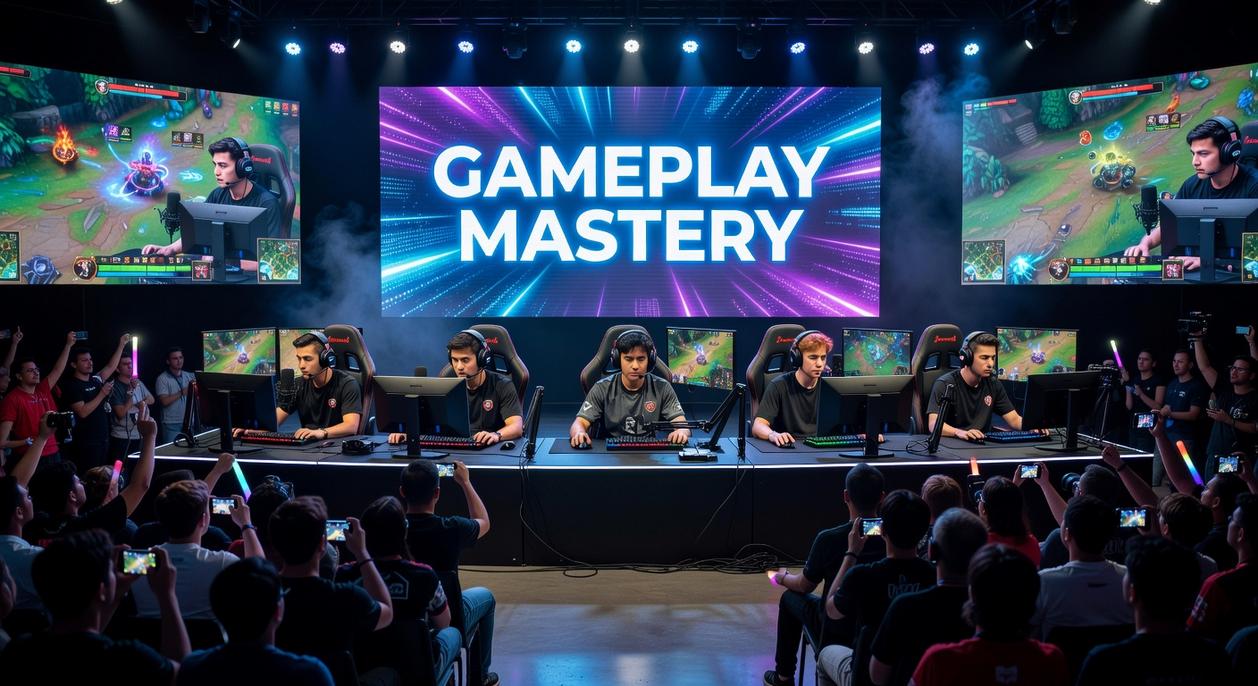
At its heart, every great game runs on loops—repeatable cycles of action and reward that keep players engaged. Designers often split these into two tiers: micro and macro. While that sounds technical, the idea is simple. One loop happens in seconds. The other unfolds across an entire play session.
Micro-Loops: The Moment-to-Moment Actions
Micro-loops are the smallest, fastest cycles in a game. Think reloading a weapon in Call of Duty, parrying in Sekiro, or landing a perfect drift in Mario Kart. Each action triggers feedback—sound, animation, points—that encourages you to do it again. Over time, repetition builds muscle memory, meaning your body performs inputs almost automatically (yes, like typing your password without looking).
Some argue micro-loops are just mechanical filler—flashy inputs masking shallow design. However, that overlooks how essential they are. According to research on player engagement and feedback systems, immediate feedback increases immersion and perceived competence (Sweetser & Wyeth, 2005). Without satisfying micro-loops, even the best story feels sluggish.
Macro-Loops: The Session-Defining Objectives
Meanwhile, macro-loops structure the bigger picture. Completing a questline, ranking up in a competitive ladder, or clearing a dungeon are examples. These loops provide progression—defined as measurable advancement toward a goal—and give players a reason to return tomorrow.
Critics sometimes claim macro goals alone drive retention. Yet without strong moment-to-moment design, those goals feel like chores. True core gameplay loop mastery happens when tight micro-actions feed into meaningful macro-progression. In other words, the seconds must feel good for the sessions to matter.
A Practical Framework for Mechanical Mastery
The first time I tried to “get good” at a competitive shooter, I did what most players do: I just played more. Hours more. And I stayed painfully average. It wasn’t until I started breaking the game apart that things clicked (and my rank finally moved).
Step 1: Identify the Loops in Your Main Game
Every game runs on loops—repeating cycles of action and reward. A micro-loop is the short, repeatable action cycle like aiming, shooting, and repositioning in combat. A macro-loop is the long-term progression cycle—leveling up, unlocking gear, climbing ranks.
When I mapped these out in a fighting game, I realized I was obsessing over flashy combos (macro reward) while losing neutral exchanges (micro failure). That awareness alone changed my focus.
Step 2: Analyze the Reward System
Games constantly signal what they value. Do you earn more by playing aggressively? By surviving longer? By optimizing resources?
In one strategy title, I kept rushing opponents because it “felt” dominant. The scoreboard, however, rewarded efficient expansion and economic scaling. The developer wasn’t subtle—I just wasn’t listening.
- Write down what actions consistently produce wins, XP, or rank increases.
That’s the blueprint for improvement.
Step 3: Isolate and Drill the Micro-Loop
This is where deliberate practice comes in—focused repetition with feedback. I once spent a full week practicing only recoil control in custom lobbies. No matches. No distractions. Just one mechanic until it became automatic.
Some players argue this kills the fun. I get that. Grinding drills can feel like training for a Rocky montage without the music. But separating mechanics from chaos accelerates core gameplay loop mastery faster than “just playing.”
Pro tip: track one measurable stat during drills—accuracy percentage, combo success rate, or build speed—and aim for incremental gains.
Master the loop, and the wins follow.
Advanced Concepts for Competitive Play
Complex strategy games run like layered ecosystems. An economic loop feeds a military loop, which unlocks a research loop, each cycling like gears in a clock. Ignore one gear and the whole machine slips. Think of it as spinning plates: gold income, unit production, tech upgrades—all balanced or they crash.
In competitive arenas, core gameplay loop mastery isn’t enough. Real dominance means jamming your opponent’s gears. Deny resources in an rts, bait a reload in a shooter, snap a combo in a fighter. DISRUPTION turns their rhythm into hesitation, and hesitation wins matches consistently.
Rewiring Your Brain for Victory
You came here to break past that frustrating plateau—and now you can. You have the tools to see beyond flashy graphics and surface tactics, and instead recognize the systems that truly determine performance. That “skill ceiling” wasn’t a limit on your talent. It was a gap in understanding. Once you focus on core gameplay loop mastery, everything changes.
By identifying, analyzing, and drilling the loops that drive outcomes, you’ve built a personal blueprint for smarter practice and faster improvement. No more grinding without progress.
Ready to dominate instead of plateau? Start deconstructing your favorite game today and apply this framework. Thousands of competitive players use these strategies to level up—now it’s your turn. Load in, break it down, and take control.